
On Debbie’s Desk: Nia Notes…
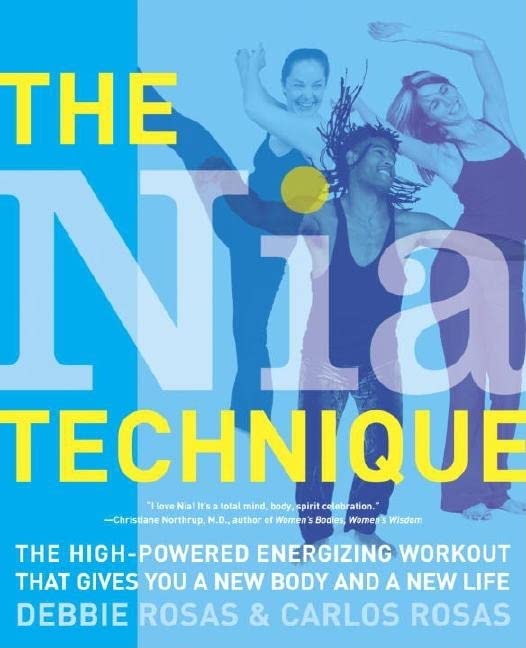
My Nia enumerations that serve as guiding companions for moving with The Nia Technique book for more structure, inspiration, and practical tools in Your Body + Life!
- Use Your Eyes, Body, + Mind:
✔ Let your eyes guide you—observe the images as visual cues to shape your body’s form, while respecting your unique structure and movement style.
✔ Let your body guide you—sense what feels right and honor the messages of comfort or discomfort.
✔ Let your mind witness and reflect—self-awareness is key to refining and deepening your practice.
✔ The images in The Nia Technique book act as movement symbols rather than rigid forms. Your goal is not perfection, but to explore and sense movement in a way that brings ease and joy.
Practice Tip: pause and ask yourself, “What am I sensing? How can I adjust to feel more aligned and comfortable?”
2. Use Your Repetition to Refine Sensitivity:
✔ Approach each repetition as a fresh experience, sensing subtle differences in your body.
✔ Notice if a movement becomes easier, smoother, or more expressive over time.
✔ Allow yourself to flow between form, or structured movement and freedom, or your unique expression.
Practice Tip: on each repetition, adjust one small thing—your breath, your stance, or your range of motion—to refine the movement experience.
3. Use Your Language of Sensation + Awareness:
✔ Nia language is designed to activate your body’s natural intelligence. Phrases like “the voice of the body” guide you into a deeper sensory connection to movement.
✔ Move beyond just copying movement—allow the language to evoke new sensations and emotions.
✔ Balance scientific logic, which are the body’s natural mechanics, with somatic creativity, which is your personal movement expression.
Practice Tip: let language guide sensation—if a movement is described as “expanding,” feel your body stretch beyond its usual space. If it’s “grounding,” sense your feet sinking into the Earth.
4. Use Your Body Centering:
✔ Being body-centered means staying fully connected to sensation, emotion, and presence. It means sensing your movement from the inside out rather than only focusing on external form.
✔ Your body communicates through sensation—listen and respond to its cues.
✔ Physical, emotional, and mental energy are interconnected—what you feel emotionally can be sensed in the body, and vice versa.
✔ Each part of your body has intelligence—from your feet to your fingertips, your cells “think” and communicate.
Practice Tip: before you move, take a deep breath. Close your eyes and sense your body’s state right now. Then, begin your movement practice with awareness and gratitude.
5. Use Your Awareness + Enhance Your Practice:
✔ Awareness is an art. It is about paying attention—not just to movement, but to the sensations, emotions, and thoughts that arise as you move.
✔ Pause and feel—notice how each movement affects your body.
✔ Refine comfort—make micro-adjustments to find ease and balance.
✔ Witness your experience—observe without judgment, simply notice.
✔ Expand sensation—shift your attention to different body parts and layers of movement.
Practice Tip: try scanning your body after a movement session. Ask yourself: “Which areas feel warm, stretched, or relaxed? Where do I sense energy?”
6. Use Your Mindfulness + Move with Presence:
✔ Mindfulness brings depth and richness to every movement. It keeps you connected, engaged, and in flow.
✔ Slow down and tune into details—how does your weight shift? How does your breath support movement?
✔ Stay fascinated—approach each movement as if experiencing it for the first time.
✔ Move with sensation, not just habit—let movement be a discovery, not just an exercise.
Practice Tip: instead of rushing through a sequence, pause mid-movement. Sense what is happening internally, before continuing.
7. Elevate Your Practice:
✔ Simple techniques bring more awareness, creativity, and depth into your movement practice.
✔ Use your voice—affirm movements with sounds like “Yes!” or exhale forcefully to engage your core.
✔ Engage your hands and arms—gesture emotions and create intentional expression.
✔ Activate your feet—step, sink, and rise to build strength and agility.
✔ Let your breath guide energy—inhale for expansion, exhale for grounding.
✔ Explore dynamic speeds—shift from slow, fluid movement to sharp, precise actions.
✔ Add emotion to motion—let joy, strength, or curiosity shape how you move.
✔ Incorporate spirals and circles—create fluidity in joints and spine.
✔ Visualize energy flow—imagine painting space with your movements.
Practice Tip: before a session, choose one focus—such as fluidity, grounding, or expression—and explore how it transforms your movement experience.
Final Thoughts:
✔ Move with joy + curiosity because your body is your teacher, your guide, and your source of wisdom. By bringing awareness, mindfulness, and sensation into your movement practice, you transform exercise into a deeply fulfilling, healing, and expressive experience.
✔ Trust your body—it knows more than you think.
✔ Move for joy, not perfection—Nia is about self-discovery, not performance.
✔ Celebrate your unique movement signature—no one moves quite like you.
Enjoy your journey, and may every movement awaken new sensations, insights, and joy!
For when you become your own movement coach; tuning into your own sensations, adjusting to what feels right to you, and allowing your body’s wisdom to lead you — these are some of my simple ideas for moving Your Body In Your Body’s Way.
Please enter your email to receive your FREE subscription to Awakening Body + Life at www.debbierosas.com for the latest DR Education publications to support Your Body + Life journey, as well as all the Nia Technique news, information, announcements, and events!
 Awakening Body + Life