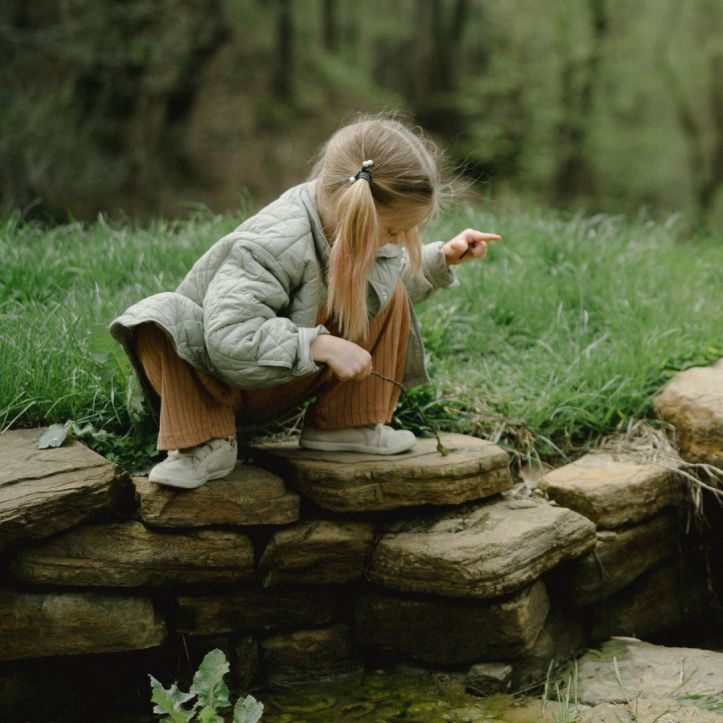
Exploring A New Way of Standing, By Debbie Rosas.
I remember watching my mother pull up her silk stockings, gently fastening them to her garter belt. She adored her legs. They were the perfect stilts for her Botticelli body—and the one part of her body that remained untouched by time or weight. She stood in her power through those legs. They carried her elegance, her strength, and her sacred femininity.
Not everyone feels that way about their legs. Some people avoid looking at them. Some never learn to trust them. And some—like one of my friends—have lost the use of them entirely. They’ve built a remarkable life without the function of their legs. But I know, from our interactions; that way deep down, they’d give anything to walk with them once more.
Legs matter. They move us through the world. They’re our two-wheeled transportation, beautifully engineered with bones such as the tibia, the fibula, the long femur, the complex knee joint, and the feet together with ankles working in exquisite partnership. Most of us don’t fully inhabit our body, much less our legs. We usually take both of them for granted.
We dance, move, jump, kick, expecting them to “just do it.” When they fail, we wonder why. For many people the answer is simple. They lack movement, education and a sensory relationship with their legs. They need to find their legs—again. This may sound odd. But, in fact, we’re born with our leg knowledge and skill with a developmental map to follow.
That map takes us from the ground to standing upright. All able-bodied humans go through the same primal moves from embryonic, moving in water like a fish; to creeping, belly down like a lizard; into crawling on all fours like a bear, standing or squatting like a monkey. hands free. You’d think with all this preparation, we’d be amazing upright bipeds.
Look around and you’ll see this is not true. How many people at any age do you see modeling excellent posture with strong, supple, and resilient legs? I bet not many. Don’t take that the wrong way. I’m not judging, I’m doing what I learned by studying the body, its design, and function. I’m remembering what martial arts has taught me: grounding and centering.
Martial Arts stances aren’t just leg postures. They’re disciplined practices with nervous system medicine to balance and anchor the body’s sympathetic and parasympathetic systems in harmony for a way to find greater comfort, reduce stress, and stabilize our movement without force. In Nia, we ground and center not just with technique, but with sensation.
Grounding begins in the feet—bare feet, if possible. Sensing and feeling the Earth, giving to the Earth and also receiving life force energy from the Earth into our legs. Sensing is how we rediscover our leg relationship and being able to hear the voice of our body’s leg say, “Stand and sense being held, connected, supported, inside, out and bottom to top.”
Sensing is how we walk and sense the Earth beneath us; our spine rising like a sapling and our pelvis rocking like a cradle of trust. Trust we feel in our heart and legs. In The Nia Technique, the primal practice of The Nia 5 Stages: embryonic, creeping, crawling, standing, and walking while sensing helps us re-pattern our relationship with the ground.
To discover and to explore with leg power is to walk with presence. To ground through our legs is to remember we are strong. To sense our legs, bones, muscles, and joints is to reclaim our birthright for rising and moving through life with grace. Finding and reclaiming the relationship we have with our legs is a spiritual act. It’s a somatic return and it’s an invitation.
As I began to research my legs I slowed down. I listened and looked at my leg’s anatomical design to better understand their function and help me sense, feel and hear their voice of “this is healthy and this is not healthy.” Following the body and my body’s sensations led me to grounding, centering, and expressing. Not as ideas, but as practices. As embodied truths.
I used to think grounding was about being still. But the more I studied, the more I sensed, and the more I realized like everything in life, grounding is alive and in constant motion. It’s dynamic. Responsive. Rooted in motion; I observe myself stopping in the motion and resting in a martial art stance. In Yoga, a sitting posture or stillness for preparing to meditate.
As I began to explore what it truly means to connect physically with the Earth, to sense its support beneath my feet, and to meet Earth’s energy with my legs and spring-loaded joints, not stiff resistance; how I moved about and how I was in stillness shifted. My concept of functional movement technique, which was focused on form, eventually became more graceful.
It also became more dynamic and emotionally expressive. The Nia Technique, “sink and rise” movement, I usually tweaked and adjusted by monitoring the three planes of high-middle-low range of motion became more dynamic. With grounded ease, rather than effort, I reclaimed more of my leg relationship. Next came centering; finding my core from the inside-out.
I asked myself, “Where does movement begin?” I knew it was not in the limbs, but in the mind. My focus, directing my attention and utilizing my life force energy, becomes physically and energetically functional in my body through The Nia Technique base moves. I imagined roots from the soles of my feet grounding me and radiating energy out and around me.
What I sensed in my legs was strength without tension. With attention placed in my Hara, that deep energy center just below my navel, I gave myself a wellspring of centering power and an origin for focused and intentional motion. As I learned to guide my steps, kicks, and stances from beneath and behind, all my movement arts changed within me.
My movements no longer started at the surface. They began in a center; rooted, directed and whole. My Hara wasn’t just a physical place. It became a place of centering and presence. And from that presence, I began to truly feel my legs. Then came the most beautiful surprise of all: expression. As I focused on my Hara, I began to feel something rising. A sense of essence.
Not performative. Not decorative. Not apologetic. I noticed how my feet weren’t separate, but extensions of my center. Each step felt more like a signature. Each shift of weight, a declaration, “I am here.” “I am whole.” “I belong.” My legs were no longer something I used. They were something I expressed through. In finding my legs, I was finding more of myself.
My journey into grounding, centering, and expressing deepened my understanding of anatomy and awakened a primal and energetic presence. It brought me home again to my new and wiser body. Finding my legs was never about building muscle. Like all body parts I explore and research, it was about building relationship. About sensing support.
It was about learning to move physically and energetically, leading from focused intent. About expressing not just movement—but essence. And that, for me, is the heart of the practice of The Nia Technique. We move to remember. We sense to come home. And we move with music, not just to be seen, but to feel ourselves fully alive, rooted, centered, and free.
Please enter your email address to receive your FREE subscription to Awakening Body + Life at www.debbierosas.com for the latest Debbie Rosas publications to support your body and life journey, as well as all The Nia Technique, The Body’s Way, and Awakening Body + Life news, information, announcements, and events!
 Awakening Body + Life